In what ways does the history of multiple migration impact the development of the Chinese-Latino diaspora?
Introduce Yourself
Hello! My name is Sneha and I’m a 10th grade global history teacher in New York City!
Framing of the Exhibit from a Teacher’s Perspective
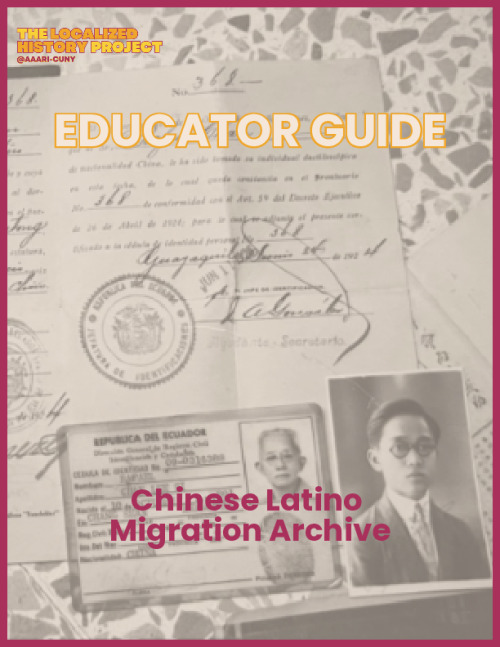
In this exhibit, Clarissa provides us with the opportunity to bring our students into the world of better understanding identity, migration, and diaspora. The case of the Chinese-Latino community offers our students a look both into cultural sites across NYC, and an examination of the impacts of colonialism and capitalism on the foundations of migrations and cross-group solidarity.
Pedagogical Considerations/Accessibility Notes/Teaching in a NYC Classroom
Considerations:
- This is a good opportunity to teach about the economic structures of capitalism and its relatedness to colonialism, with an emphasis on exploited labor.
- Indentured servitude and chattel slavery, while sharing certain similarities, were different structures. Make sure to note this to students when teaching about the history of indentured servitude and the ‘coolie’ trade.
- For many, it’s easy to forget stories of multiple migrations. Making sure students understand that the Chinese Latino community has their own distinct identity and culture, and that identity in New York should not be conflated as one-dimensional is important!
Vocabulary:
- Coolie
- Indentured Servitude
- Corporal Punishment
- Sinophobia
- Naturalization
- Diaspora
- “Unassimilable”
Standards/Location in Scope and Sequence
10.4 IMPERIALISM: Western European interactions with Africa and Asia shifted from limited regional contacts along the coast to greater influence and connections throughout these regions. Competing industrialized states sought to control and transport raw materials and create new markets across the world. (Standards: 2, 3, 4; Themes: MOV, TCC, GEO, GOV, EXCH)
11.1 COLONIAL FOUNDATIONS (1607– 1763): European colonization in North America
prompted cultural contact and exchange between diverse peoples; cultural differences and
misunderstandings at times led to conflict. A variety of factors contributed to the
development of regional differences, including social and racial hierarchies, in colonial
America. (Standards: 1, 2, 3, 4, 5; Themes: MOV, TCC, GEO, GOV, ECO, EXCH)
11.4 POST-CIVIL WAR ERA (1865 – 1900): Reconstruction resulted in political reunion and expanded constitutional rights. However, those rights were undermined, and issues of
inequality continued for African Americans, women, Native Americans, Mexican Americans, and Chinese immigrants. (Specifically: 11.4d Racial and economic motives contributed to long-standing discrimination against Mexican Americans and opposition to Chinese immigration) (Standards: 1, 4, 5; Themes: ID, TCC, CIV, ECO)