Post-9/11 Surveillance of South Asian and Muslim Communities in New York City


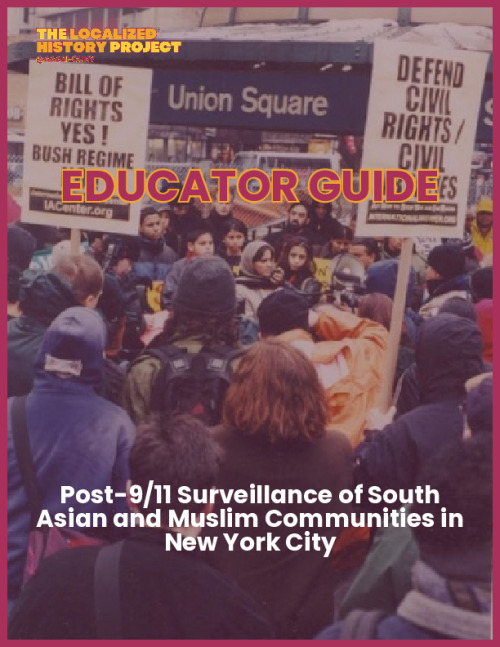
America is no stranger to enforcing oppressive systems under the guise of upholding a strong democracy. Throughout history, its government has exploited the land, work, and livelihoods of minoritized groups, from the colonization of indigenous peoples to the enslavement of Black Americans. This racialized violence still holds consequences on communities today, and it is a cycle that continues in our country. After 9/11, America directed its attention to South Asian and Muslim communities, profiling them as security threats. New York City became its own surveillance state. This project explores how the attacks on 9/11 had an impact on South Asian communities in New York City. From Little Pakistan in Kensington to Jackson Heights in Queens, these communities experienced immense discrimination and were subject to harmful stereotypes.
Predominantly South Asian neighborhoods experienced an era of mass surveillance and excessive policing by the city, state, and government entities, invoking a sense of fear for their safety and confusion about their belonging in New York City. A knock on the door could lead to deportation; a humorous comment about Bush could lead to interrogation. But throughout these conditions, how did South Asian communities respond? Would they persevere and challenge the prejudice against them, or aim to mitigate legal escalations? This project aims to evaluate the reactions and movements that emerged within South Asian communities and to demonstrate the power of community effort in times of heightened scrutiny.
Teachers using this exhibit should encourage students to draw connections between South Asian surveillance and excessive policing and broader topics of systemic racism or racial profiling in history. They can analyze how government institutions use false narratives, such as the notion of South Asians as terrorists, to push cycles of racial oppression. Furthermore, the importance of resilience and cross-racial solidarity may be connected back to personal experiences.